

Pu-erh Tea Ingredients: The Ancient Art of Fermented Tea Leaves
Pu-erh tea, also known as “black tea” in the Far East, is a unique blend of ancient fermented leaves. Originating from the Yunnan province of China, it gets its name from the market town where it was first developed. The tea leaves undergo a microbial fermentation process after being dried and rolled, resulting in a darker color and a change in flavor. This fermentation allows the tea to improve with age, much like a fine wine, and some pu-erh teas can retain their freshness for up to fifty years. Pu-erh tea can be found in compressed brick form or as loose leaf tea and can be made from both green and black tea leaves.
Key Takeaways:
- Pu-erh tea is a unique blend of ancient fermented leaves.
- It originated in the Yunnan province of China.
- The fermentation process gives the tea a darker color and changes its flavor.
- Pu-erh tea improves with age and can be stored for long periods.
- It is available in compressed brick form or as loose leaf tea.
The Ingredients of Pu-erh Tea
Pu-erh tea, known for its unique flavor and aroma, is made primarily from the large leaf strain of camellia sinensis called Dayeh. These ancient tea trees, some dating back 500 to 1000 years, thrive in temperate regions and are harvested during mid-spring. The leaves of Dayeh contribute to the distinctive taste and character of pu-erh tea.
The flavor profile of pu-erh tea is influenced by various environmental factors, resulting in a diverse range of flavors. From smooth and fruity to peaty, grassy, musky, herbal, and earthy, pu-erh tea offers a captivating sensory experience for tea enthusiasts.
The History of Pu-erh Tea
Pu-erh tea, with its intriguing flavors and long-standing tradition, has a fascinating history that dates back to the Yunnan Province during the Eastern Han Dynasty. This renowned tea gained popularity during the Tang Dynasty, reaching its height as a trade commodity in the Ming and Qing Dynasties.
Merchants played a pivotal role in the spread of pu-erh tea, as they traveled along the ancient Tea Horse Roads, bartering for tea in Pu-erh County and transporting it back to their homes. The demand for a tea that could withstand long journeys and be easily preserved led to the discovery of the fermentation process that not only preserved the tea’s freshness but also enhanced its flavor.

Pu-erh tea became a highly prized and valuable item for bartering, as its unique fermentation process created a tea that improved with age and possessed distinct flavors.
Combining the convenience of transportability and the allure of enhanced taste, pu-erh tea soon became a sought-after and cherished beverage among tea enthusiasts.
Whether enjoyed in the Ming Dynasty or the modern era, the history of pu-erh tea is a testament to its enduring popularity and timeless appeal.
Pu-erh Tea Types and Variants
Pu-erh tea offers a fascinating variety of types and variants that cater to different preferences and taste profiles. There are primarily two classifications of pu-erh tea: raw (sheng) and cooked/ripe (shou).
Raw Pu-erh (Sheng)
Raw pu-erh is crafted through a meticulous process that includes withering the leaves, allowing bacteria to naturally ferment the tea, pan-firing the leaves to halt enzyme activity, and finally drying them. This fermentation, in conjunction with aging, gives raw pu-erh its distinct flavor and character. It is known for its vibrant, fresh, and complex taste, with notes ranging from floral and grassy to fruity and earthy.
Cooked/Ripe Pu-erh (Shou)
Developed in the 1970s, cooked/ripe pu-erh involves a faster and controlled fermentation process. It includes a careful mixing of leaves with a bacterial culture, which speeds up the fermentation process. This results in a smoother and mellow tea with a dark, rich, and earthy flavor. Cooked pu-erh is often preferred by those who enjoy a deep, robust taste and a full-bodied cup of tea.
Both raw and cooked pu-erh teas are available in various forms, including compressed cake formats and loose leaf options. The compressed cakes are not only aesthetically pleasing but also offer convenience in storage and aging. Meanwhile, loose leaf pu-erh allows for greater customization and flexibility in tea brewing.
Half-Cooked Pu-erh
Another interesting variant is half-cooked pu-erh, which is a unique blend of raw and cooked leaves. These leaves undergo a process that includes smoke-steaming and pressing. This variant combines the lively and delightful characteristics of raw pu-erh with the smoothness and depth of cooked pu-erh, resulting in a nuanced and layered cup of tea.
To visualize the variations in pu-erh tea types and variants, refer to the table below:
| Pu-erh Tea Type | Description |
|---|---|
| Raw (Sheng) Pu-erh | Made through natural fermentation and aging, resulting in a vibrant and complex flavor profile. |
| Cooked/Ripe (Shou) Pu-erh | Processed for faster fermentation, offering a smooth and rich cup with earthy undertones. |
| Half-Cooked Pu-erh | A unique blend of raw and cooked leaves, creating a harmonious balance of flavors. |
By understanding the different types and variants of pu-erh tea, you can explore and appreciate the diverse range of flavors and experiences that this ancient tea has to offer.
Brewing and Preparation of Pu-erh Tea
Pu-erh tea, with its unique flavors and characteristics, requires a specific brewing and preparation method to fully enjoy its rich taste. Here, I will guide you through the steps for brewing the perfect cup of pu-erh tea.
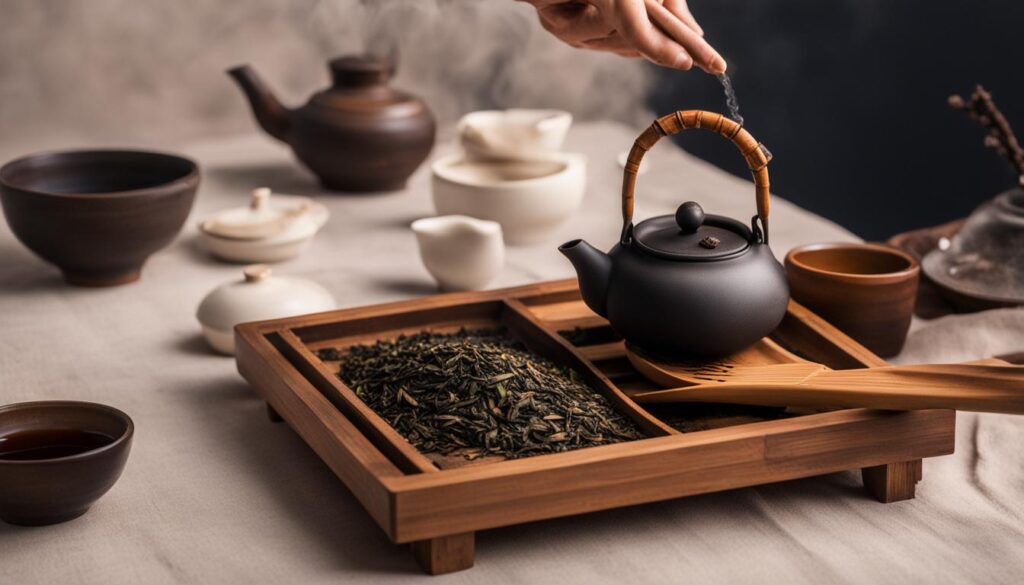
In order to brew pu-erh tea, it is recommended to use a Yixing teapot or a gaiwan tea bowl. These traditional Chinese tea utensils are specifically designed to enhance the flavors and aromas of the tea.
Here is a step-by-step guide to brewing pu-erh tea:
- Start by preparing your teapot or tea bowl. Rinse it with hot water to warm it up and remove any dust or impurities.
- Measure the desired amount of pu-erh tea leaves. It is best to use high-quality loose leaf pu-erh tea for the best flavor.
- Place the tea leaves into the teapot or tea bowl.
- Boil fresh water and let it cool for a moment until it reaches a temperature of around 195°F (90°C). Pu-erh tea is more delicate than other teas and can be easily over-brewed, so it’s important to use water that is slightly cooler than boiling.
- Pour the hot water over the tea leaves in a gentle, circular motion. Allow the tea leaves to steep for about 30 seconds to 1 minute, depending on your preference and the type of pu-erh tea you are using.
- Once the steeping time is up, pour the tea into another container, such as a tea pitcher or small cups. This step helps to ensure that the flavors are evenly distributed and prevents over-steeping.
- Repeat the steeping process multiple times, as pu-erh tea can be infused several times. Each infusion will bring out different flavors and nuances. Adjust the steeping time according to your taste preferences.
- When enjoying pu-erh tea, it is recommended to slurp it in order to fully experience the complex flavors and aromatic profiles. Slurping allows the tea to mix with air and enhances the taste on your palate.
Brewing pu-erh tea is an art, and with practice, you can find the perfect balance of flavors and create a truly enjoyable tea-drinking experience. Experiment with different steeping times, water temperatures, and tea-to-water ratios to discover your personal preference.
Remember, the highest quality pu-erh teas can be steeped multiple times, revealing different layers of flavor with each infusion. So sit back, relax, and savor the richness of pu-erh tea.
Pu-erh Tea and Caffeine Content
In the world of tea, pu-erh stands out for its unique fermentation process and distinct flavors. One aspect that tea enthusiasts often wonder about is the caffeine content in pu-erh tea. Let’s explore how caffeine levels in pu-erh tea evolve over time and with different steeping methods.
As pu-erh tea ages and undergoes the post-fermentation process, its caffeine content naturally diminishes. This means that older pu-erh teas may have lower caffeine levels compared to their younger counterparts. However, it’s crucial to note that the exact caffeine content in a cup of pu-erh tea can vary depending on the steeping time.
The caffeine content in pu-erh tea increases the longer it is steeped. If you prefer a stronger caffeine kick, you can steep your pu-erh tea for a longer duration. Conversely, if you’re looking for a milder caffeine experience, opt for a shorter steeping time.
| Steeping Time | Caffeine Content |
|---|---|
| Short Steeping (1-2 minutes) | Lower caffeine content |
| Medium Steeping (3-4 minutes) | Moderate caffeine content |
| Long Steeping (5+ minutes) | Higher caffeine content |
It’s also worth mentioning that the caffeine content in pu-erh tea lessens with each subsequent steeping. If you choose to re-steep your pu-erh leaves, the subsequent infusions will have a lower caffeine impact than the initial steep.
So, whether you’re seeking a robust caffeine boost or a milder pick-me-up, pu-erh tea offers flexibility based on your steeping preferences.
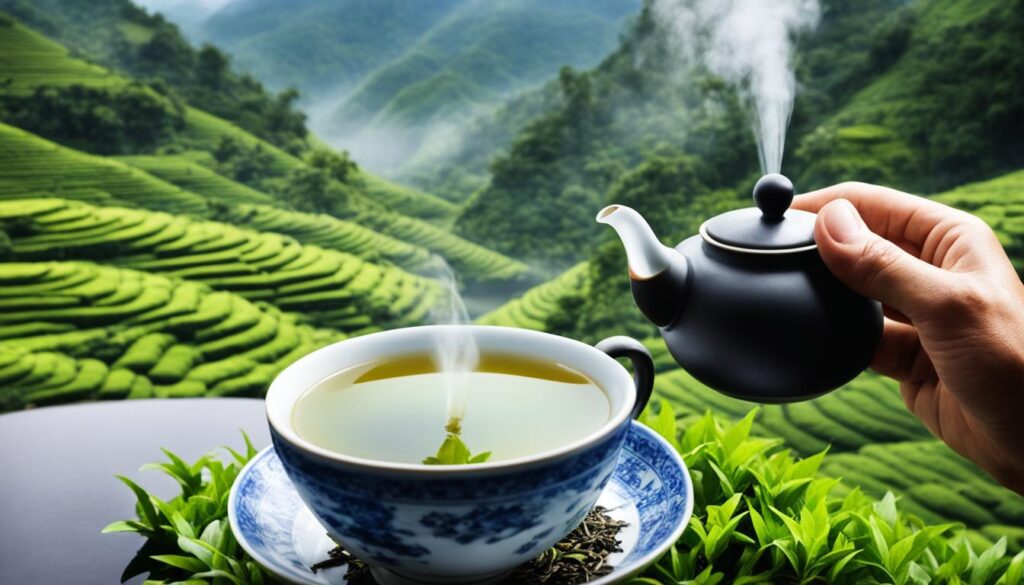
Discovering the caffeine content in pu-erh tea allows tea connoisseurs to adjust their brewing methods to achieve their desired level of caffeine intake. Now that we know how caffeine levels in pu-erh tea evolve, let’s explore the various recipes and grades of pu-erh tea in the next section.
Pu-erh Tea Recipes and Grades
In the world of pu-erh tea, recipes and grades are like the secret codes that unlock the flavor profiles and origins of each unique brew. When you come across a pu-erh tea cake, you’ll notice a recipe number, consisting of four digits. These numbers hold the key to understanding the tea’s production year, leaf grade, and factory of origin.
Let’s break down a recipe number as an example. Consider the code 7813. The first two numbers, 78, refer to the year the tea was first produced, which in this case is 1978. The third number, 1, represents the leaf grade. However, it’s important to note that the grade does not necessarily reflect the quality of the tea. Finally, the last number, 3, indicates the factory from which the tea originates.
One of the most famous recipe numbers in the pu-erh tea world is 7542. This blend started in 1975 and features grade 4 leaves from the renowned Menghai Tea Factory. The combination of fermenting leaves from different years and grades gives pu-erh tea its distinctive flavors and complexity.
While some tea connoisseurs prefer a specific recipe or grade, pu-erh tea can be made using different grades of leaves, allowing for a wide range of flavors and experiences. It’s an exciting world to explore, where taste profiles evolve and develop over time, much like the tea itself.
| Recipe Number | Year | Leaf Grade | Factory |
|---|---|---|---|
| 7813 | 1978 | 1 | 3 |
| 7542 | 1975 | 4 | Menghai Tea Factory |
As you delve deeper into the world of pu-erh tea, make sure to explore different recipes and grades to find your preferred flavors and aromas. Each cup offers a unique journey through time and tradition, allowing you to savor the rich heritage of this remarkable fermented tea.
Health Benefits and Other Effects of Pu-erh Tea
When it comes to the health benefits of pu-erh tea, the ripe variety is particularly known for aiding digestion. It has been traditionally consumed with rich foods to promote better digestion and ease discomfort. The unique fermentation process of pu-erh tea enhances its digestive properties, making it a popular choice for those seeking relief after a heavy meal.
Beyond its digestive benefits, pu-erh tea is also believed to have a “qi” effect. This refers to the warm and soothing sensation it provides within the body. Many people find pu-erh tea to be calming and invigorating, helping them relax and unwind.
Scientific studies have even identified the presence of statins in pu-erh tea. Statins are a class of medications commonly prescribed for coronary diseases. The discovery of statins in pu-erh tea suggests that it may have potential cardiovascular benefits, although further research is necessary to confirm these findings.
However, it is important to note that pu-erh tea may contain potentially toxic microbes. To minimize any potential risks, it is advisable to rinse the tea before consuming it. This simple precaution can help ensure that you enjoy the health benefits of pu-erh tea without any unwanted contaminants.
To summarize, the health benefits of pu-erh tea include:
- Aiding digestion
- Providing a warm and soothing sensation in the body
- Potentially offering cardiovascular benefits
While pu-erh tea has been celebrated for its potential health benefits, it is always recommended to consult with a healthcare professional before making any significant changes to your diet or lifestyle.
| Health Benefits of Pu-erh Tea | In summary |
|---|---|
| Aids digestion | Pu-erh tea has traditionally been consumed with rich foods to aid digestion and promote better digestive health. |
| Warm and soothing sensation | Pu-erh tea is believed to have a “qi” effect, providing a warm and soothing sensation within the body. |
| Potential cardiovascular benefits | Scientific studies have identified statins in pu-erh tea, suggesting possible cardiovascular benefits. |
The Unique Fermentation Process of Pu-erh Tea
The fermentation process in pu-erh tea is a crucial step that sets it apart from other types of tea. It is this process that gives pu-erh tea its distinctive flavors, aroma, and health benefits. Let’s delve into the unique fermentation process of pu-erh tea and explore its fascinating journey.
The Fermentation Process
The fermentation process begins after the tea leaves have been harvested and dried. In the case of pu-erh tea, the leaves are then steamed and compacted, creating an environment conducive to microbial growth. This step is essential for initiating the fermentation process that transforms the tea.
During fermentation, microorganisms, primarily a fungus called Aspergillus niger, interact with the tea’s chemicals, resulting in chemical changes that give pu-erh tea its distinct characteristics. These microorganisms break down complex compounds present in the tea leaves, releasing new flavors and transforming the composition of the tea.
The Distinction from Kombucha
It is important to note that pu-erh tea fermentation differs from the fermentation process used in other traditional beverages like kombucha. While kombucha relies on a symbiotic culture of bacteria and yeast, pu-erh tea fermentation involves specific microorganisms, primarily fungi, that interact differently with the tea leaves.
The Role of Fermentation in Flavor Development
Through fermentation, pu-erh tea undergoes a remarkable transformation. The process mellows the tea, creating a smooth, earthy, and complex flavor profile that is highly prized by tea enthusiasts. The duration of fermentation also plays a role in the final flavor, with longer fermentation typically resulting in deeper, richer flavors.
Fermentation and Health Benefits
In addition to flavor development, fermentation also contributes to the health benefits of pu-erh tea. The fermentation process enhances the tea’s antioxidant properties, which can help protect against free radicals and support overall well-being.
Studies have also shown that pu-erh tea fermentation can lead to the formation of certain compounds, such as statins and polyphenols, which may have potential health benefits. However, it is important to note that the presence of potentially toxic microorganisms has been found in pu-erh tea. Therefore, it is recommended to rinse the tea before consumption to reduce any potential risks.
| Fermentation Process | Key Features | Benefits |
|---|---|---|
| Initiated by steaming and compacting the tea leaves | Interaction between microorganisms and tea chemicals | -Development of unique flavors and aroma |
| -Transformation of tea’s chemical composition | ||
| -Enhanced antioxidant properties | ||
| -Potential health benefits | ||
| Distinct from kombucha fermentation | Fungi-based fermentation process | -Different microorganisms involved |
| -Unique interaction with tea leaves | ||
| -Dissimilar flavor profiles |
The Science and Study of Pu-erh Tea Fermentation
In the fascinating world of pu-erh tea, fermentation plays a crucial role in shaping the characteristics and flavors of this unique beverage. Scientific studies have provided valuable insights into the fermentation process, shedding light on the microbial composition and other factors involved.
Research has shown that fresh tea leaves have a higher fungal diversity compared to pu-erh tea, while pu-erh tea exhibits a higher presence of beneficial bacteria. Interestingly, aged raw pu-erh shares similar fungal and bacterial communities with new cooked pu-erh, indicating the complex dynamics at play during the fermentation process.
While pu-erh tea offers an array of health benefits, it is important to note that some potentially toxic microbes have been found in pu-erh tea. However, these toxins were not detected in prepared tea, mitigating any potential risks. To ensure maximum safety, it is advisable to rinse pu-erh tea before use to eliminate any potential contaminants.
Scientists have also identified particular compounds present in pu-erh tea that contribute to its unique properties. Through the fermentation process, pu-erh tea develops statins, gamma-aminobutyric acid (GABA), and polyphenols, elements that add depth and complexity to the final product. These compounds, combined with the fermentation-induced microbial activity, contribute to the distinct flavors and health-enhancing qualities of pu-erh tea.
Source Links
Frequently Asked Questions
What are the main ingredients of pu-erh tea?
The main ingredient in pu-erh tea is the large leaf strain of camellia sinensis called Dayeh.
How is pu-erh tea made?
Pu-erh tea undergoes a microbial fermentation process after being dried and rolled, resulting in a darker color and a change in flavor.
What is the history of pu-erh tea?
Pu-erh tea has a rich history that can be traced back to the Yunnan Province during the Eastern Han Dynasty.
Are there different types of pu-erh tea?
Yes, there are two classifications of pu-erh tea: raw (sheng) and cooked/ripe (shou).
How should pu-erh tea be brewed and prepared?
Pu-erh tea is often brewed using a Yixing teapot or a gaiwan tea bowl and can be steeped multiple times.
How does the caffeine content in pu-erh tea vary?
The caffeine content in pu-erh tea naturally diminishes with age, but the actual amount can vary depending on the steeping time.
How are pu-erh tea recipes and grades labeled?
Pu-erh tea cakes are labeled with a recipe number, consisting of four digits.
What are the health benefits of pu-erh tea?
Pu-erh tea has been traditionally believed to aid digestion and provide a warm and soothing sensation in the body.
How does the fermentation process in pu-erh tea work?
The fermentation process in pu-erh tea is initiated when the tea is steamed and compacted, creating an environment for microorganisms to grow.
What is the science behind pu-erh tea fermentation?
Studies have shown that pu-erh tea has different fungal and bacterial communities compared to fresh tea leaves, and some potentially toxic microbes have been found in pu-erh tea.
Related Articles
Oolong Tea Ingredients: A Journey Through Its Unique Elements
Oolong tea is a cherished and celebrated tea that elegantly straddles the realms of black and green tea. It is made from partially fermented Camellia Sinensis leaves, giving it a unique flavor between black…
Earl Grey Ingredients: Decoding the Citrusy Charm of This Tea
When it comes to tea blends, Earl Grey stands in a league of its own with its unique and enchanting citrus flavor. But what are the key ingredients that give Earl Grey its distinctive…
Chai Tea Ingredients: The Spice Mix That Defines a Culture
Chai tea, with its comforting blend of spices and bold flavors, has become much more than just a beverage. It is a cultural icon that represents the rich traditions and flavors of India. Made…

Advertisement